



 CART
0
Items
0.00
CART
0
Items
0.00
NEWS & BLOG · September 11, 2025 · By Zhithera
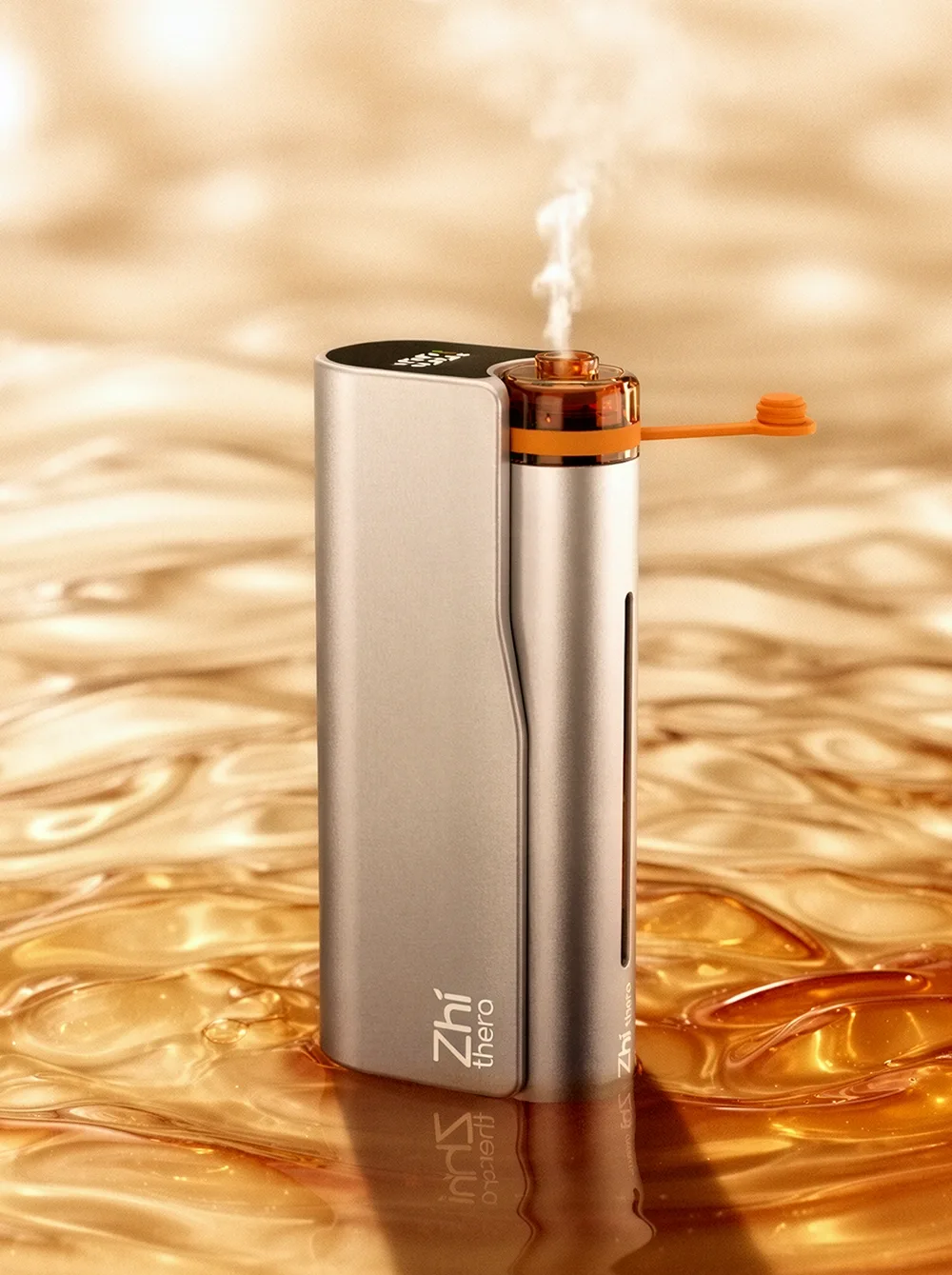
A waterless diffuser asks very little of you. There is no water tank to empty and no heating plate to scale, so most upkeep takes seconds. A few habits keep the mist fine and even and keep the device in good shape. This guide covers the routine: what to do after each refill, what to do weekly, how to wipe the atomizing mesh correctly, and when to replace the cartridge. If your mist has already dropped off and you want a fast fix, jump to fixing a weak mist, step by step.
A diffuser that is looked after simply performs better. A residue-free mesh gives a fuller, more even mist; a clean cartridge keeps each scent true instead of muddy; and a dry body and dock keep charging reliable. It also gets the most from your pure essential oils, since a good oil run through a gummed-up mesh will never smell its best. Spare refillable 6.5 mL cartridges make it easy to keep one per scent.
It helps to know what you are cleaning. A mesh diffuser turns liquid oil directly into a fine mist using a fast-vibrating mesh, with no water and no heat (more in how micro-mesh atomization works). Because the oil goes straight from cartridge to mist, the one part that really needs attention is that atomizing mesh.
Water-based ultrasonic diffusers need regular attention: standing water can leave mineral scale, and a damp tank left between uses can turn stale. A waterless design skips all of that. The oil sits in a sealed cartridge and is atomized directly, so there is no reservoir to rinse and nothing to drain. We compare the two in why waterless diffusers are lower-maintenance. The trade-off is small: keeping the fine mesh clear is the heart of good maintenance.
No special equipment:
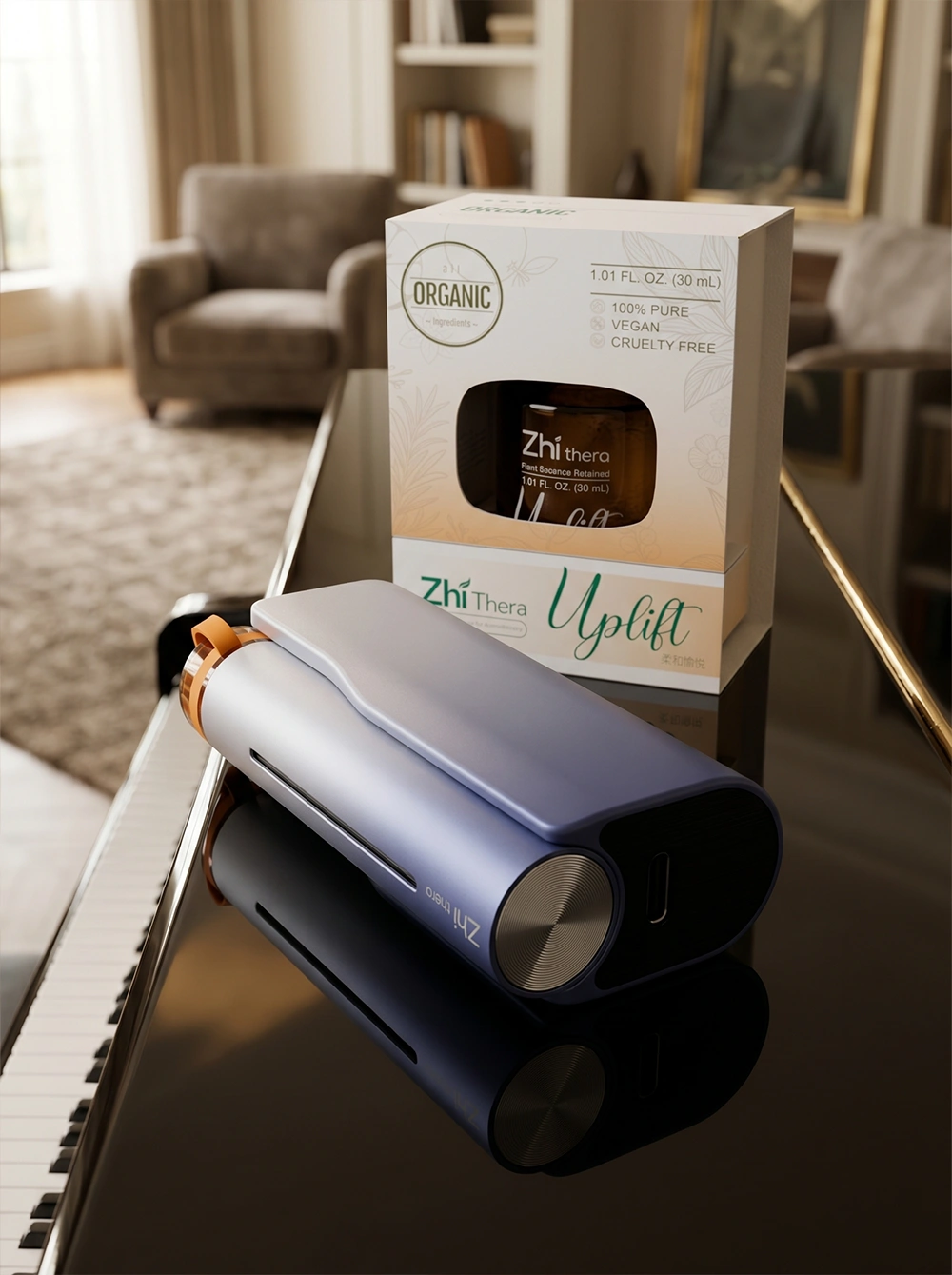
Oil film on the atomizing mesh is the most common reason a mist gets weaker. To clear it:
A light touch is almost always enough.
Micro-mesh atomization works best with thin, low-viscosity liquids. Oils diluted with carrier oils such as grapeseed, jojoba or olive, often sold for massage or roll-on use, are sticky and build up on the mesh until the mist shrinks or stops. Some pure oils are naturally thick as well: sandalwood, vetiver, patchouli and resins like frankincense and myrrh. That is a property of the oil, not a fault in the device.
Two habits prevent most clogs. First, favor pure single oils over diluted blends; our article on pure essential oils vs diluted blends shows how to read a label. Second, if you want to use a naturally thick oil, thin it with alcohol (roughly 60 to 80 percent alcohol to 20 to 40 percent oil), keep it away from flame, and wipe the mesh before and after. Zhithera's single-note essential oils are pure, undiluted and small-molecule; the few blended ones are cut with a natural atomization solvent rather than a carrier oil; and the fragrance oils are bio-based and low viscosity. All of them are made to mist without clogging.
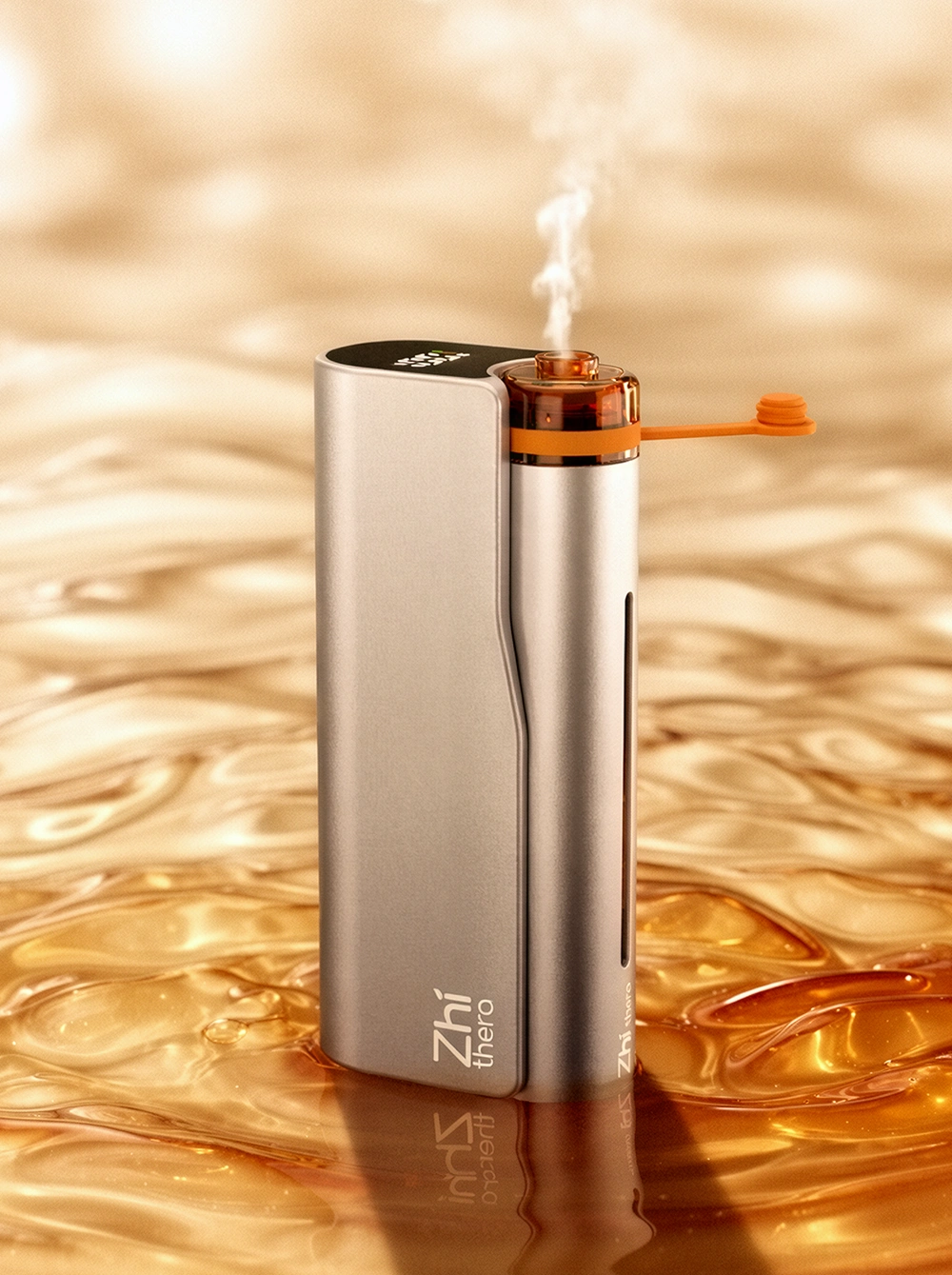
Going from a bold scent to a delicate one? The cleanest way is to swap the cartridge rather than refill the same one, so the old oil does not linger in the new scent. Keeping one cartridge per oil also means you never mix scents, which tends to muddy both. Store the oils themselves sealed and away from light and heat; see how to store essential oils to keep them fresh.
Keep the main unit and charging dock dry, and don't let oil sit on the shell, contacts or charging port; wipe spills promptly after each refill. Use the device within its rated range of 5 to 40°C (41 to 104°F) and 10 to 80 percent humidity, keep it out of direct sun and away from heat, and charge it with the supplied charging dock.
The cartridge houses the precision mesh, and like any fine mesh it is a consumable part. With Zhithera oils, fitting a fresh cartridge about every five refills keeps output at its best. That is a rhythm for peak performance, not a sign anything has failed, and many cartridges keep going beyond it. Because the cartridge is a consumable, it is not covered by warranty once used; the diffuser body and charging dock are covered by a 12-month warranty against faults that are not user-caused. Keeping a spare refill cartridge on hand means you are never caught out.
A weak or stop-start mist is one of the most common diffuser questions, and usually one of the quickest to solve. In a waterless mesh diffuser the cause is almost always oil film on the atomizing mesh or an oil that is too thick, not a fault in the device. Work through the checks below in order; most people are done by step two.
A waterless diffuser makes a very fine, dry mist. It doesn't produce the thick white plume of a water-based diffuser, so in a bright room it can be hard to see even when it is working normally. Look against the light or in a darker spot, listen for the faint working sound, and trust your nose: if you can smell the scent, it is diffusing.
Also check the mode. The D1 Mini runs intermittently in all three modes: mode 1 mists for 10 seconds every 5 minutes, mode 2 for 15 seconds every minute, and the in-car mode wakes on vibration and mists for 5 seconds every 2 minutes. Pauses between bursts are normal. On the D1, the low setting is intermittent too.
If the scent itself has turned muddy rather than weak, use a separate cartridge for each oil.
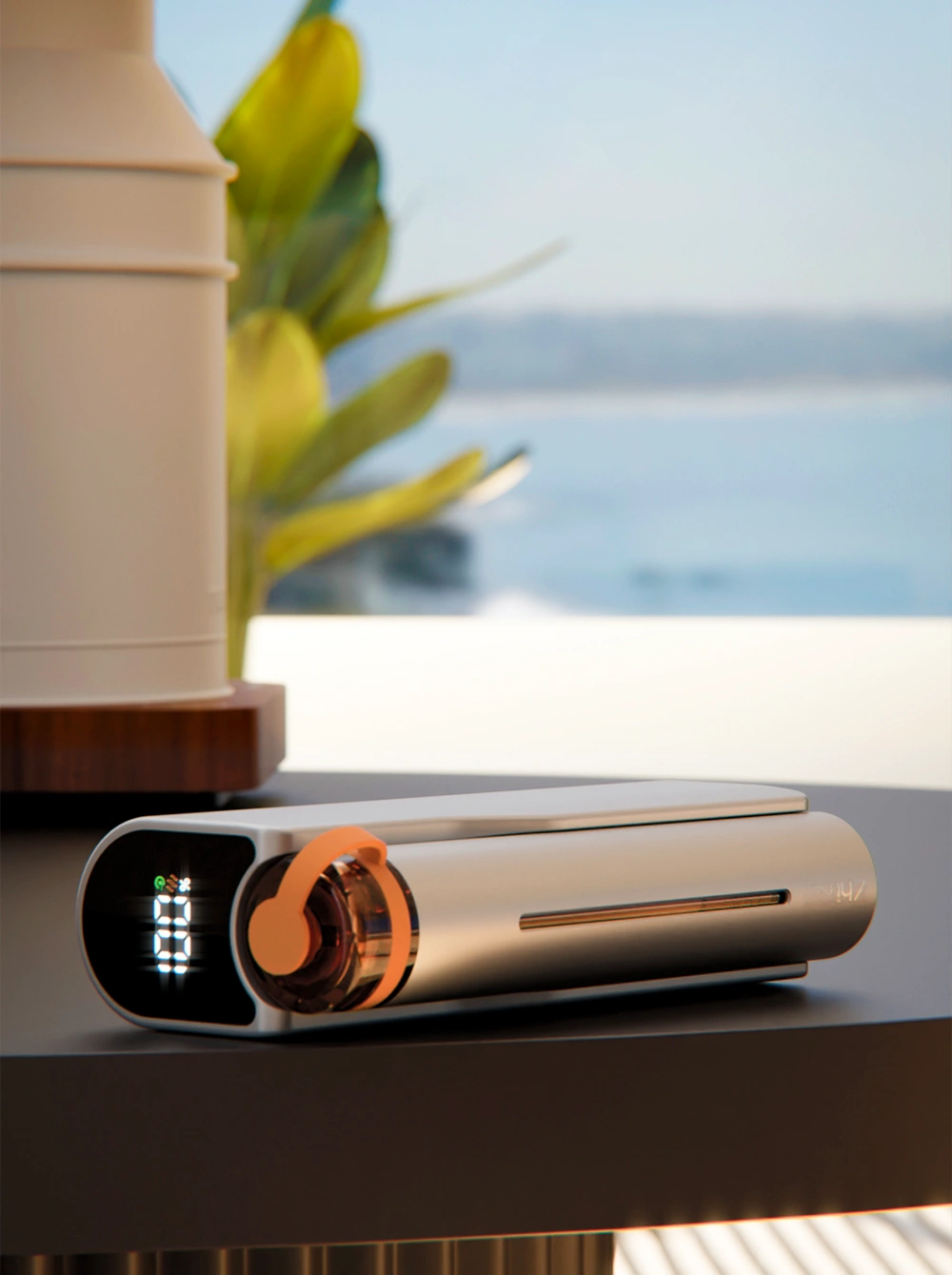
No. Never immerse or rinse it. Turn it off and wipe the body with a barely damp cloth.
A dry tissue or cotton swab is all the mesh needs. Alcohol's role is thinning naturally thick oils before you fill the cartridge.
First check that the cartridge is seated and the device is charged. If a unit arrives leaking, with a broken seal, or produces no mist before first use, contact support within 15 days of delivery.
No. Alcohol-based perfumes and mixed liquids that aren't made for diffusion can affect atomization. Stick to pure essential oils or diffuser fragrance oils.
A few seconds of care at each refill keeps a Zhithera diffuser reliable. Pair a well-kept waterless aromatherapy diffuser with pure, low-viscosity botanical essential oils and clogs rarely get a chance to start.
Essential oils are concentrated aromatic plant extracts intended for diffusion only. They are not intended to diagnose, treat, cure or prevent any disease or condition; keep oils and devices out of reach of children and pets, and diffuse in a well-ventilated space.
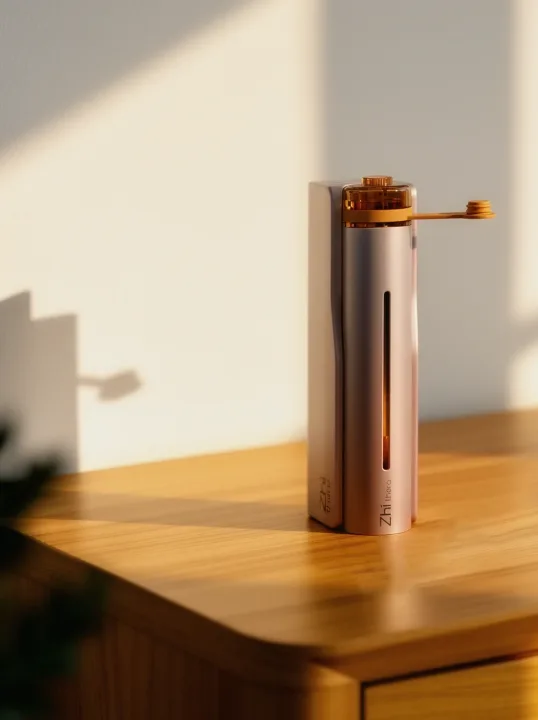 October 18, 2026
Are Waterless Diffusers Worth It? Cost vs Value
October 18, 2026
Are Waterless Diffusers Worth It? Cost vs Value
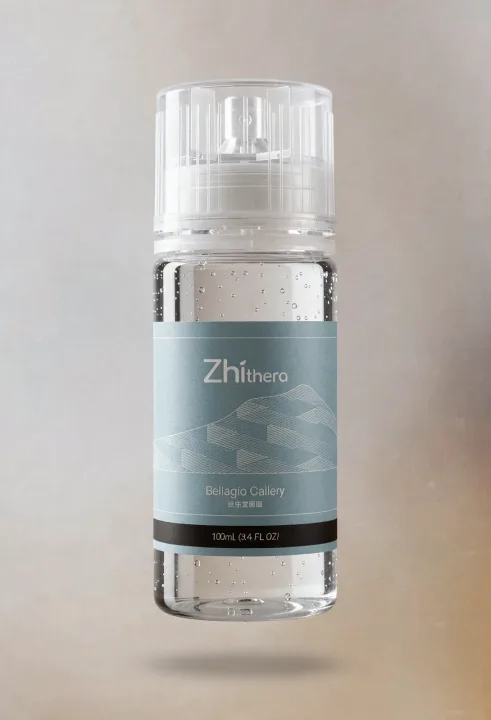 October 14, 2026
Nebulizing Diffuser One: How a Single Waterless Unit Works
October 14, 2026
Nebulizing Diffuser One: How a Single Waterless Unit Works
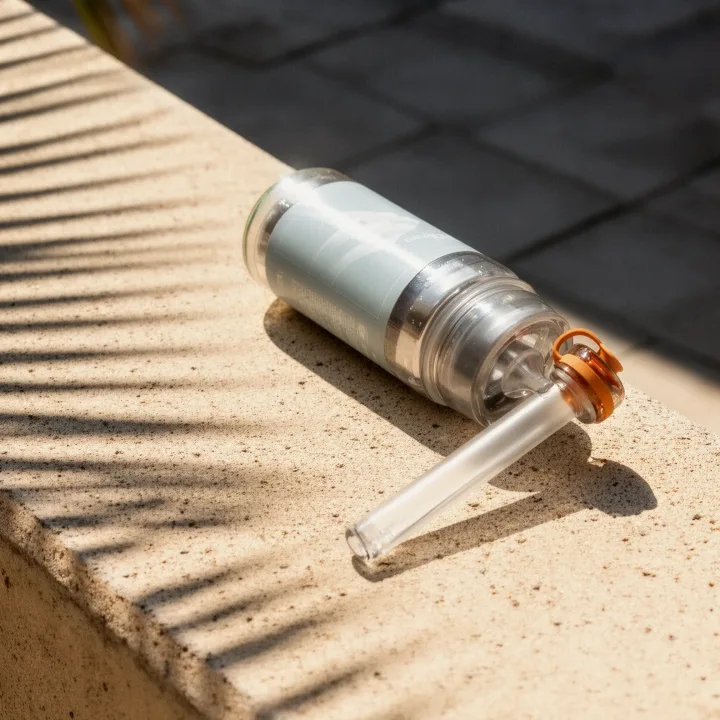 October 13, 2026
Private Label Waterless Diffusers and Custom Scents: How OEM with Zhithera Works
October 13, 2026
Private Label Waterless Diffusers and Custom Scents: How OEM with Zhithera Works
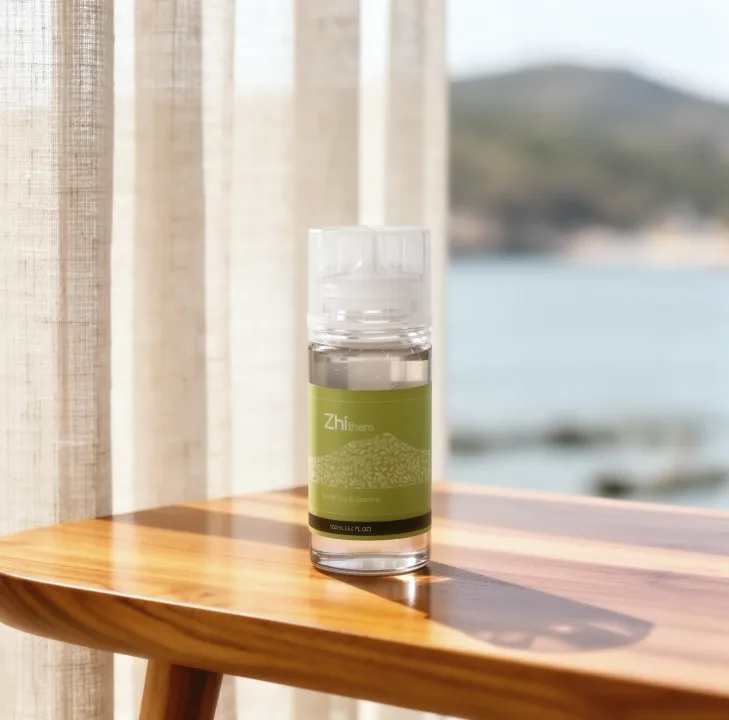 October 13, 2026
Scenting Solutions for Hotels, Offices & Automotive Businesses
October 13, 2026
Scenting Solutions for Hotels, Offices & Automotive Businesses
 October 11, 2026
How Sustainable Are Waterless Diffusers? Water, Oil and Hardware
October 11, 2026
How Sustainable Are Waterless Diffusers? Water, Oil and Hardware
 October 7, 2026
Side-by-Side Diffuser Model Comparison and Tech Specs
October 7, 2026
Side-by-Side Diffuser Model Comparison and Tech Specs


Zhithera – A Professional Aromatherapy Delivery System Zhithera designs waterless, heat-free diffusers that atomize pure botanical essential oils and designer fragrance oils into a micron-fine mist using Advanced Micro-Mesh Atomization. Built for consistent, controllable aromatic states — focus, relaxation, recovery and restful ambiance — our range serves homes, offices, cars, spas, hotels and retail spaces worldwide. Every batch is traceable and supported by recognized third-party testing, with dependable wholesale and distribution support for partners around the globe.
Aromatherapy & Essential Oil Notice
Zhithera essential oils and fragrance oils are non-medical aromatic products intended for diffusion only. They are not intended to diagnose, treat, cure or prevent any disease or condition, and are not medical devices. Do not apply oils to skin or ingest them, and keep oils and devices out of reach of children and pets. Ensure good ventilation, and if you are pregnant, nursing or have a medical condition, please consult a qualified professional before use. Scent is experienced differently by everyone; discontinue use if any irritation occurs. We make no therapeutic, disinfecting or insect-repellent claims for any Zhithera product.