

 CART
0
Items
0.00
NEWS & BLOG · July 7, 2025 · By Zhithera
A fresh, well-scented room is a nicer place to sit down and work, and many people like to pick a scent that matches the kind of day they have ahead. Scent preferences vary a lot from person to person, but bright, clean botanicals are the usual choice for a desk or study. This guide goes through the scents people most often reach for, what each one smells like, how to set up a diffuser at your desk, and how to share scent politely in an office.
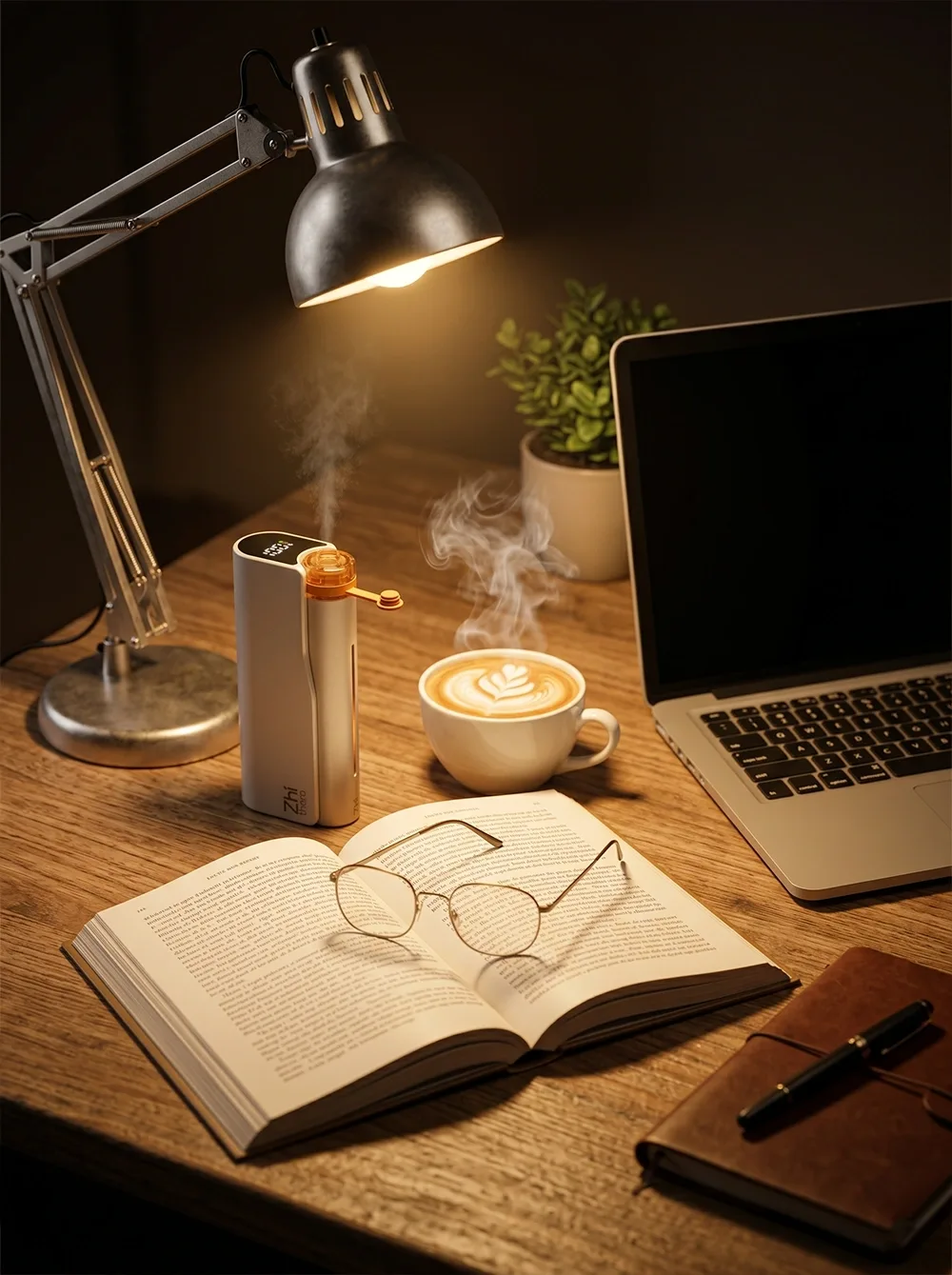
Aromatherapy at a desk is about atmosphere rather than results. A scent will not do your work for you, but a crisp, clean-smelling room can make a long session feel more pleasant than a stale one. A compact diffuser keeps that scent in the background, and you can change it when the task changes. On a desk, a compact cordless option like the Zhithera D1 Mini portable diffuser keeps the scent close without taking up space.
Keep a compact diffuser within reach and run it on the low, intermittent setting so the scent stays present without taking over. Low is also the economical setting: on a Zhithera D1 it uses about 0.14 ml of oil per hour, so one 6.5 ml cartridge lasts about 46.5 hours of running time (see how much oil to use).

Bright citrus and herbal oils are thin and low in viscosity, so they atomize cleanly. If the mist ever looks weaker, a gentle wipe of the mesh with a tissue usually sorts it out (see why your diffuser mist looks weak). Oils thinned with carrier oils such as grapeseed or jojoba are the ones that tend to clog the mesh (pure oils vs diluted blends).
Changing the scent across the day, brighter in the morning and softer later on, keeps the room from smelling the same from nine to six. Rather than mixing different oils in one cartridge, where the scents muddy each other, keep a cartridge for each and swap:
Our guide to blending and layering essential oils explains how scents work together if you want to go further.
In an open-plan office, check with the people around you first; everyone's sensitivity to fragrance is different, and some colleagues may be pregnant or have reasons to avoid certain oils. Keep the output low and intermittent, choose gentle, widely liked scents, and make sure the room is well ventilated. A personal-range diffuser on your own desk is more considerate than one trying to scent the whole floor (see essential oil safety around sensitive groups).
For a desk, the most relevant oils in Zhithera's pure essential oil line are Italian Bergamot and Brazilian Sweet Orange for a citrus note, Moroccan Rosemary for a green, herbal one, and Virginia Cedarwood for a quieter, woody base. Because the cartridge is refillable and swaps in seconds, you can rotate scents through the week.
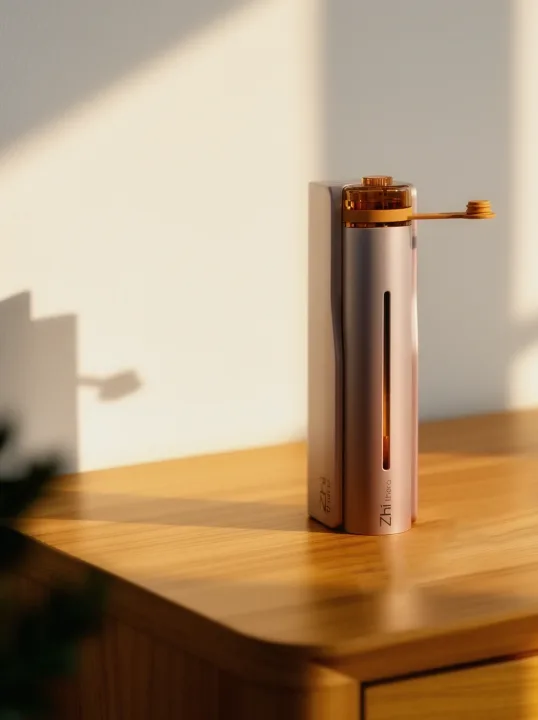
Both Zhithera diffusers are quiet, waterless and rechargeable, and both take the same 6.5 ml refillable cartridge. The D1 has an aluminum body, low, medium and high continuous output and a 3500 mAh charging dock, which suits a desk that stays put. The D1 Mini is smaller and lighter, mists in short intermittent bursts, and doubles as a car diffuser on its magnetic mount, which makes it the easier one to carry between home and office. A gentle wipe of the mesh keeps either one misting well (cleaning guide).
We don't make that claim. Diffusing a scent you enjoy can make your workspace more pleasant, and that is what these oils are for.
People who are pregnant, have high blood pressure or a history of seizures should seek advice before using rosemary. Keep the room ventilated, especially if pets share the space.
Zhithera diffusers use a vibrating mesh with no air pump, so they run very quietly.
Turn it down or off. Shared spaces work best with low output and scents everyone is comfortable with.
Essential oils are aromatic plant extracts for diffusion only. Do not apply them to skin or swallow them. They are not intended to diagnose, treat, cure or prevent any condition, including concentration or fatigue.
 October 18, 2026
Are Waterless Diffusers Worth It? Cost vs Value
 October 14, 2026
Nebulizing Diffuser One: How a Single Waterless Unit Works
 October 13, 2026
Private Label Waterless Diffusers and Custom Scents: How OEM with Zhithera Works
 October 13, 2026
Scenting Solutions for Hotels, Offices & Automotive Businesses
 October 11, 2026
How Sustainable Are Waterless Diffusers? Water, Oil and Hardware
 October 7, 2026
Side-by-Side Diffuser Model Comparison and Tech Specs


Zhithera – A Professional Aromatherapy Delivery System Zhithera designs waterless, heat-free diffusers that atomize pure botanical essential oils and designer fragrance oils into a micron-fine mist using Advanced Micro-Mesh Atomization. Built for consistent, controllable aromatic states — focus, relaxation, recovery and restful ambiance — our range serves homes, offices, cars, spas, hotels and retail spaces worldwide. Every batch is traceable and supported by recognized third-party testing, with dependable wholesale and distribution support for partners around the globe.
Aromatherapy & Essential Oil Notice
Zhithera essential oils and fragrance oils are non-medical aromatic products intended for diffusion only. They are not intended to diagnose, treat, cure or prevent any disease or condition, and are not medical devices. Do not apply oils to skin or ingest them, and keep oils and devices out of reach of children and pets. Ensure good ventilation, and if you are pregnant, nursing or have a medical condition, please consult a qualified professional before use. Scent is experienced differently by everyone; discontinue use if any irritation occurs. We make no therapeutic, disinfecting or insect-repellent claims for any Zhithera product.