


 CART
0
Items
0.00
CART
0
Items
0.00
NEWS & BLOG · October 3, 2026 · By Zhithera
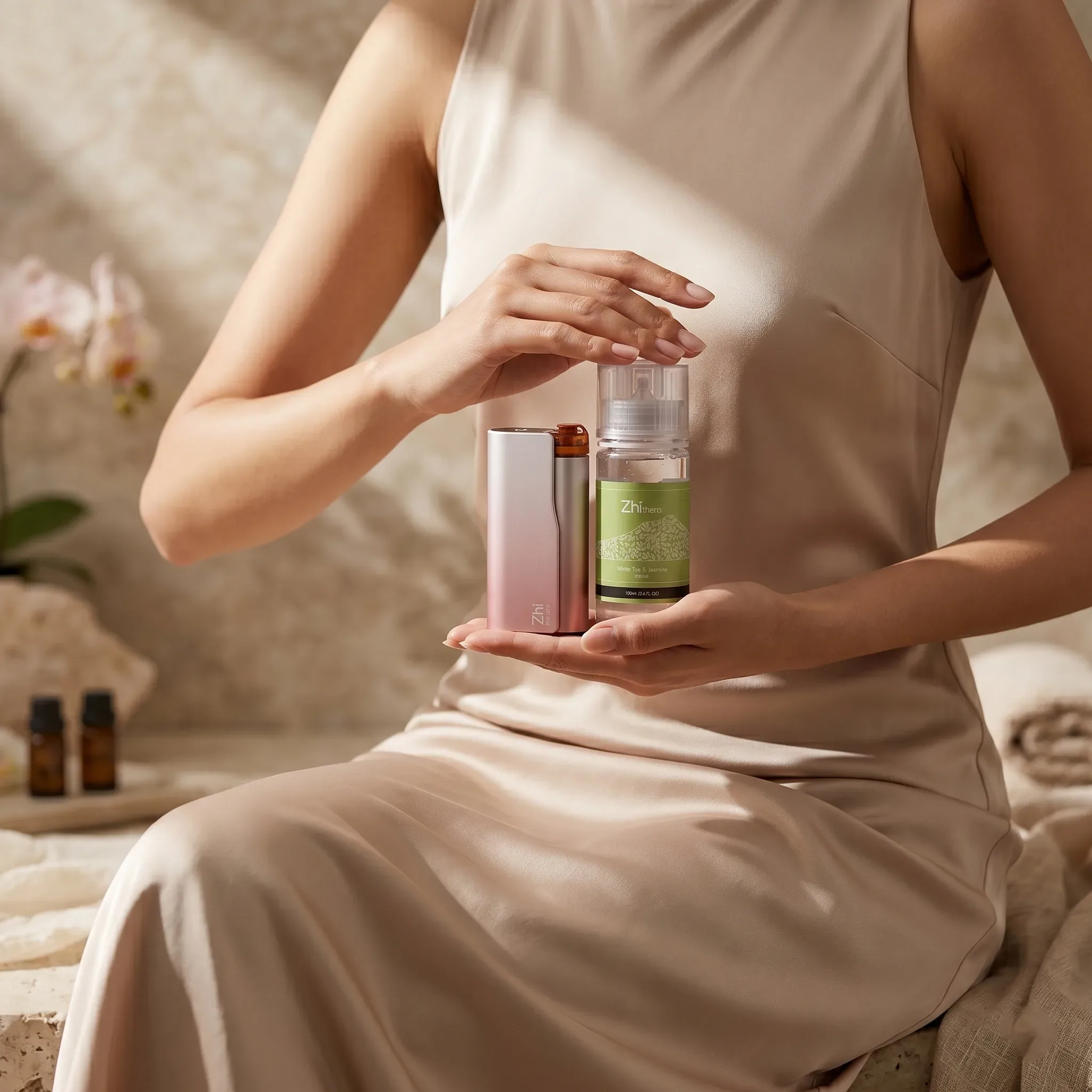
You can diffuse essential oils without water by using a waterless diffuser, which turns pure oil into a fine mist with a vibrating mesh instead of mixing it into a tank of water. You will also see these called nebulizing or cold-air diffusers; all three names describe the same idea. Nothing is heated and nothing is diluted, so the scent stays close to the oil in the bottle. This guide covers how the technology works, how it compares with water-based and heat diffusers, which oils it runs, how to set it up, how much oil it uses, and the little care it needs.
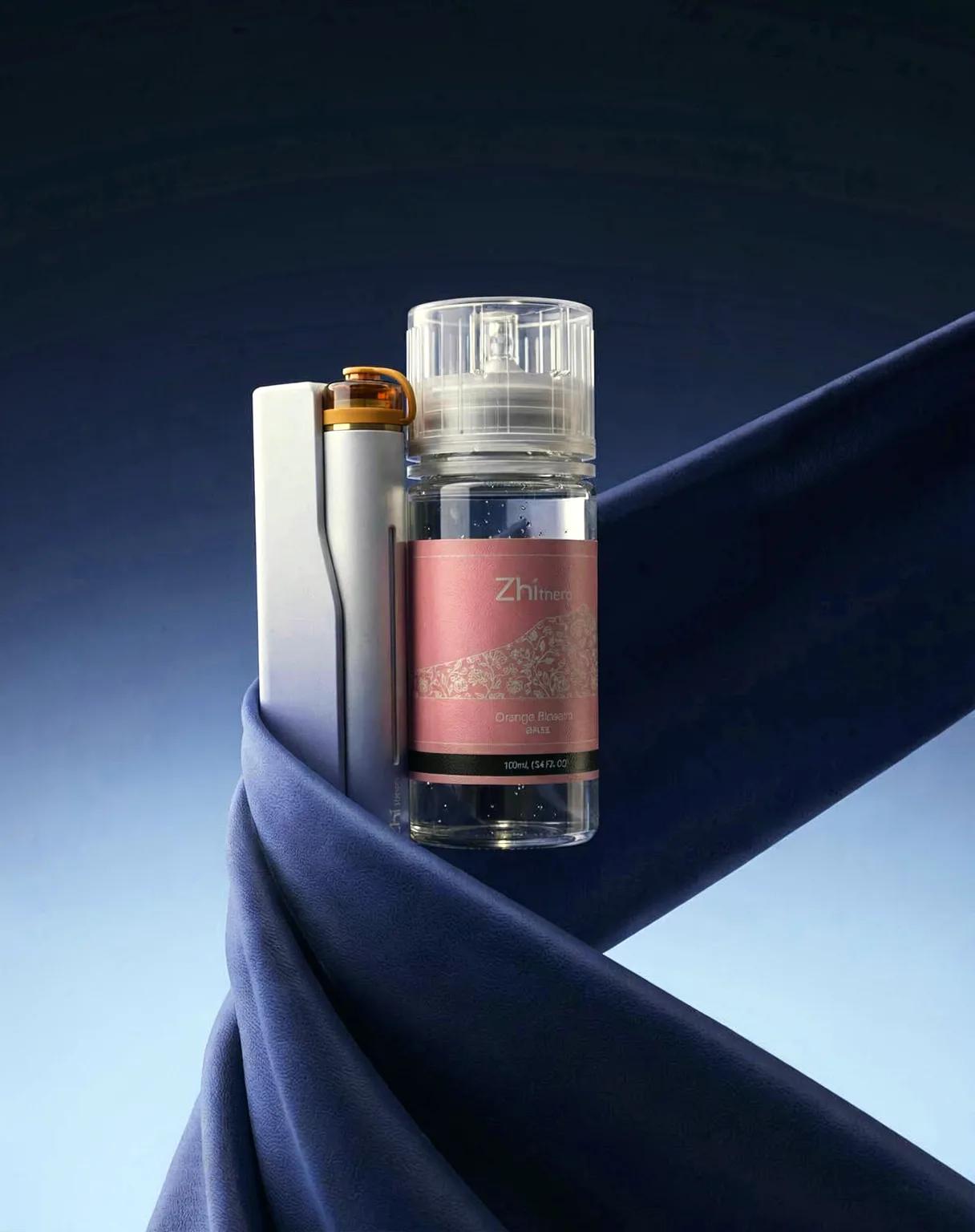
"Nebulize" simply means breaking a liquid into a fine spray of tiny droplets; the word is shared with the medical nebulizer, which works on the same physical idea. Zhithera diffusers do it with micro-mesh atomization, also described as micro-porous vibrating mesh atomization. The working part is a thin membrane perforated with microscopic holes. A piezoelectric driver makes that mesh vibrate at very high frequency, and as oil meets the moving mesh it is pushed through the holes and broken into micron-scale droplets. Both the Zhithera D1 and the compact D1 mini work this way.
Because the droplets are so small, the mist is light and often hard to see in a bright room. If you can smell the oil, it is working. One practical note: don't park a surface, fabric or your face right in front of the outlet, because mist at very close range can still settle as a thin film of oil.

An oil's character comes from its volatile aromatic compounds. Heat can change how those compounds smell, and water dilutes them, so the scent arrives softer and less defined. Keeping the process cool and waterless means what reaches the room is closer to the oil you poured in, and it smells the same at the end of a session as at the start. It also takes standing water out of the picture, which is what makes upkeep so simple.
| Waterless (micro-mesh) | Ultrasonic (water-based) | Heat or evaporative | |
|---|---|---|---|
| What reaches the room | Neat oil, undiluted | Water carrying a small share of oil | Oil evaporated from a warm plate, pad or wick |
| Scent strength | Set by the output mode you choose | Softer, because the oil is diluted | Little control |
| Humidity added | None; the mist is dry | Yes, gently humidifies | None |
| Upkeep | Occasional wipe of the mesh | Empty and rinse the tank between uses | Replace pads or wicks |
| Portability | Cordless units move from desk to bedroom to car | Water can spill | Usually plugged in |
The full comparison is in waterless vs ultrasonic diffusers, and diffuser vs reed diffuser vs candle covers devices without power.
Running undiluted oil only works if the parts touching it can take it. Zhithera's cartridge is made from oil-resistant materials (fluorosilicone, PP and COC), so the same device runs both pure essential oils and longer-lasting fragrance oils directly (see essential oils vs fragrance oils).
Viscosity is the key variable. Mesh atomization works best with thin, low-viscosity liquids. Single-note essential oils, blends thinned with a natural atomization solvent, and Zhithera's fragrance oils all fall into that range. The oils that cause trouble are usually ones cut with carrier oils such as grapeseed, jojoba or olive: they are too thick to pass through the mesh cleanly and leave residue behind, which is the most common reason a mist gets weaker. More on this in pure oils vs diluted blends.
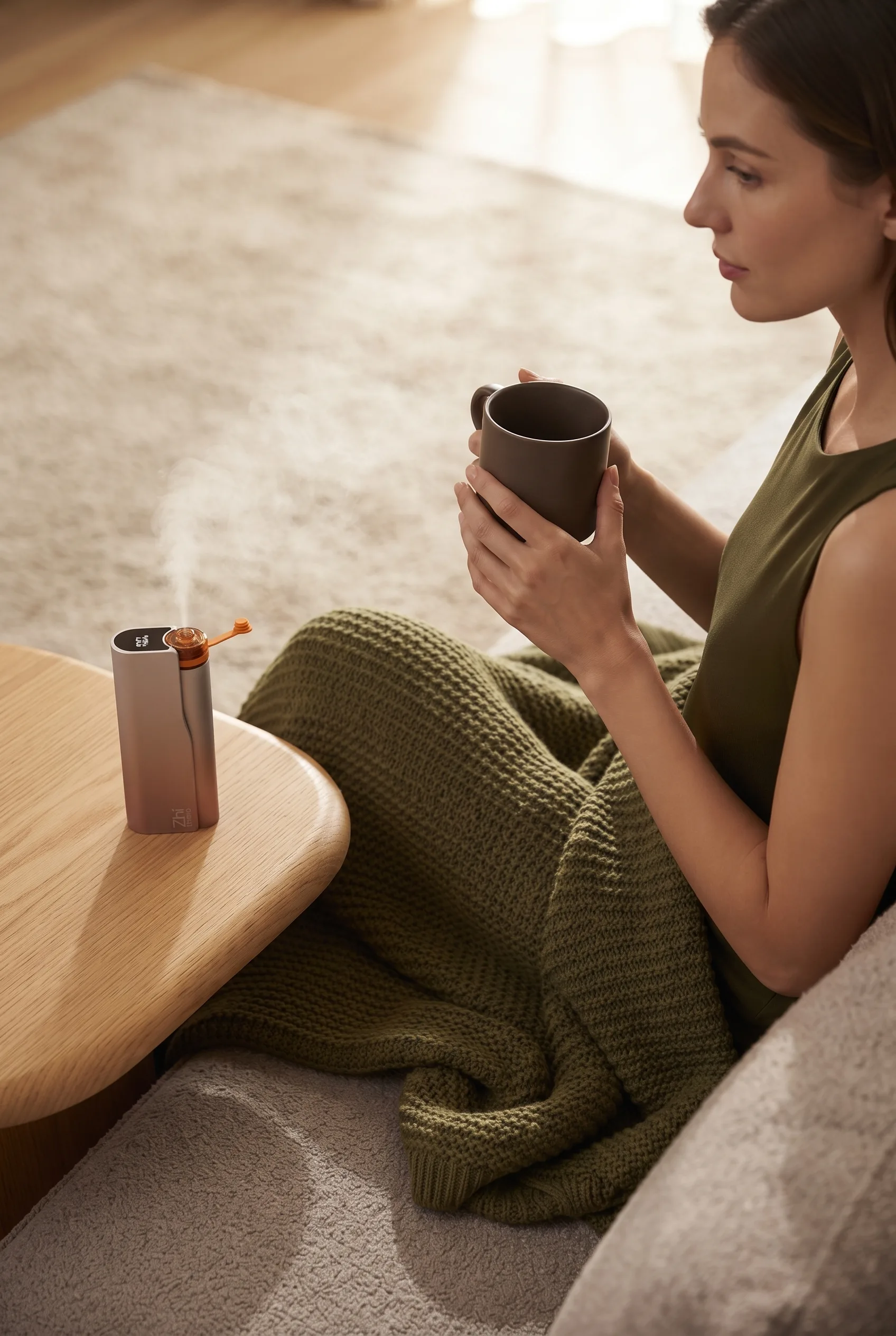
Less than most people expect, because oil is only used while the diffuser is misting. Measured on the D1, the low intermittent setting uses about 0.14 ml an hour, so a full cartridge lasts about 46.5 hours, roughly two days. Medium uses about 0.87 ml an hour and empties a cartridge in about 7.5 hours. High continuous uses about 4.3 ml an hour and empties it in about 1.5 hours. On the D1 mini, mode 1 mists for 10 seconds every 5 minutes and averages about the same 0.14 ml an hour.
Low is the everyday setting; high is for scenting a space before guests arrive. Refilled about five times, one cartridge goes through roughly 32.5 ml of oil, about one 30 ml bottle or three 10 ml bottles. Cartridge life and running cost are covered in the cartridge lifespan and scent longevity guide.
Pure botanical essential oils spread quickly and fade quickly, because nothing is added to fix them. They suit close range: a desk, a bedroom, a study or a car. Designer fragrance oils hold longer and stay consistent, so they suit living rooms and larger open spaces. Our guide to essential oil scent families helps you pick by scent.
As a rough guide, a desk or bedside area (up to about 54 sq ft) needs only low or intermittent output. A bedroom or study of about 110 to 160 sq ft runs well on low to medium, and a living room of about 160 to 320 sq ft on medium, with high before guests arrive. The D1's measured maximum coverage, about 4,090 sq ft, applies only on high continuous with fragrance oil; real results depend on ceiling height, ventilation and open windows.
Water-based diffusers hold a tank of water with a few drops of oil. That water needs regular emptying and cleaning, mineral scale or oil residue can build up inside the tank over time, and a damp tank left between uses is where stale smells and mold can start. A waterless diffuser keeps oil in a sealed cartridge, so there is no water to change and no tank to scrub.
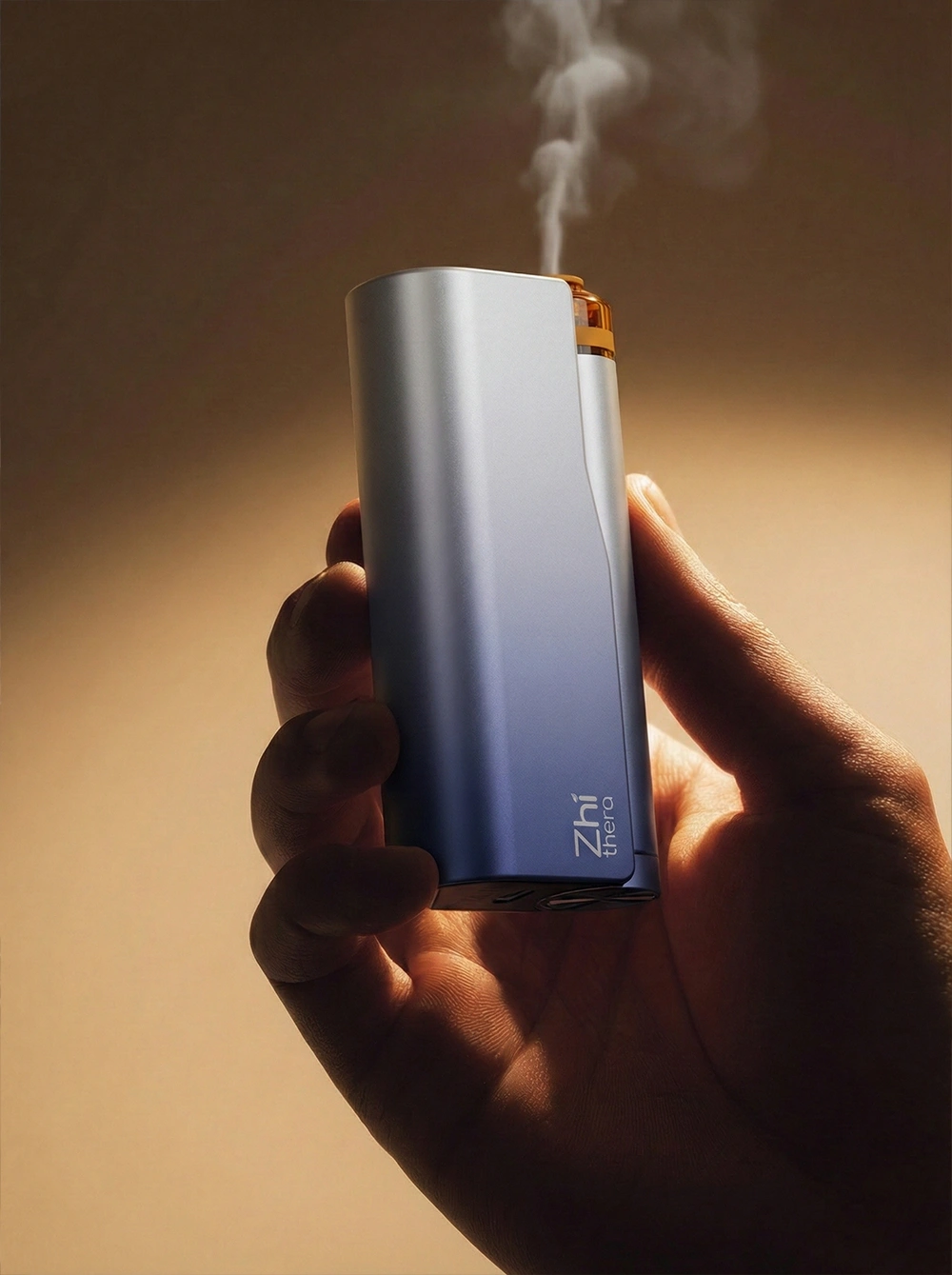
The part worth looking after is the atomizing mesh inside the cartridge. If the mist gets smaller, wipe the surface of the mesh lightly with a tissue or cotton swab; don't press down, as that can push on the white wick in the center. Wipe the body with a soft cloth while the unit is off, keep the mist outlet clear, and wipe away any oil when you change scents. The cartridge, including its mesh, is a consumable: a fresh one about every five refills, or when the mist gets noticeably weaker, keeps the mist at its best. The diffuser does not switch itself off when the cartridge runs dry, so refill or turn it off when the oil is used up, especially on high. For the full routine, see how to clean and maintain your diffuser and why your diffuser mist looks weak.
Quiet, portable and rechargeable, it fits the bedroom, the office, the car and travel. The D1 is the everyday model with low, medium and high continuous output on a 3500 mAh charging dock; the D1 mini is smaller, with three intermittent modes, including an in-car motion-sensing mode, and a magnetic car mount. It is the wrong pick in one case: if what you actually want is added moisture in a dry room, an ultrasonic unit or a humidifier does that and a waterless diffuser does not. New to all this? The beginner's guide to aromatherapy at home is a friendly place to start.
Yes, with less control. A few drops on an unglazed ceramic stone, or on a cotton pad tucked into a drawer or closet, release scent slowly over a small area. These passive methods work for drawers and closets; for a whole room, or a scent you can turn up and down, a waterless diffuser is more practical. Whatever the method, keep oils off skin and out of reach of children and pets.
Only in a diffuser built to run without water. Waterless and nebulizing diffusers atomize pure oil directly. An ultrasonic diffuser needs water to work and should not be run dry.
Yes. Both names describe diffusers that break oil into a fine mist at room temperature, with no water or heat. Zhithera diffusers do it with a vibrating micro-mesh.
No. The mesh vibrates; nothing is heated.
The droplets are fine enough that the mist is faint, especially in bright light. A scent that gets weaker over weeks usually points to a thick oil or a cartridge that is due for replacement.
There is no tank to wash. Wipe the mesh when the mist looks smaller, wipe the body when it needs it, and replace the cartridge after about five refills.
No. Fill the cartridge with oil only.
To try it at home, start with the D1 waterless diffuser and one of our botanical essential oils, or read the waterless essential oil diffuser guide to compare the models.
Essential oils are aromatic plant extracts intended for diffusion only. They are not intended to diagnose, treat, cure or prevent any condition. Never apply them to skin or swallow them, keep oils and devices out of reach of children and pets, and diffuse in a well-ventilated space.
 October 18, 2026
Are Waterless Diffusers Worth It? Cost vs Value
October 18, 2026
Are Waterless Diffusers Worth It? Cost vs Value
 October 14, 2026
Nebulizing Diffuser One: How a Single Waterless Unit Works
October 14, 2026
Nebulizing Diffuser One: How a Single Waterless Unit Works
 October 13, 2026
Private Label Waterless Diffusers and Custom Scents: How OEM with Zhithera Works
October 13, 2026
Private Label Waterless Diffusers and Custom Scents: How OEM with Zhithera Works
 October 13, 2026
Scenting Solutions for Hotels, Offices & Automotive Businesses
October 13, 2026
Scenting Solutions for Hotels, Offices & Automotive Businesses
 October 11, 2026
How Sustainable Are Waterless Diffusers? Water, Oil and Hardware
October 11, 2026
How Sustainable Are Waterless Diffusers? Water, Oil and Hardware
 October 7, 2026
Side-by-Side Diffuser Model Comparison and Tech Specs
October 7, 2026
Side-by-Side Diffuser Model Comparison and Tech Specs


Zhithera – A Professional Aromatherapy Delivery System Zhithera designs waterless, heat-free diffusers that atomize pure botanical essential oils and designer fragrance oils into a micron-fine mist using Advanced Micro-Mesh Atomization. Built for consistent, controllable aromatic states — focus, relaxation, recovery and restful ambiance — our range serves homes, offices, cars, spas, hotels and retail spaces worldwide. Every batch is traceable and supported by recognized third-party testing, with dependable wholesale and distribution support for partners around the globe.
Aromatherapy & Essential Oil Notice
Zhithera essential oils and fragrance oils are non-medical aromatic products intended for diffusion only. They are not intended to diagnose, treat, cure or prevent any disease or condition, and are not medical devices. Do not apply oils to skin or ingest them, and keep oils and devices out of reach of children and pets. Ensure good ventilation, and if you are pregnant, nursing or have a medical condition, please consult a qualified professional before use. Scent is experienced differently by everyone; discontinue use if any irritation occurs. We make no therapeutic, disinfecting or insect-repellent claims for any Zhithera product.